
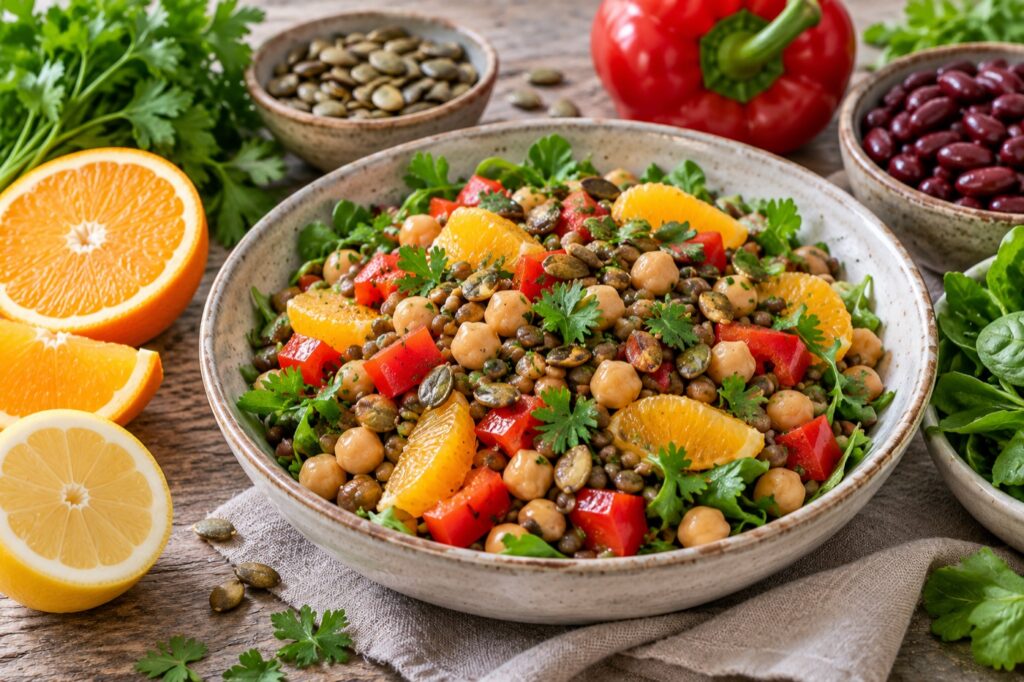
A vegan diet can provide iron from lentils, beans, chickpeas, tofu, pumpkin seeds, whole grains, leafy vegetables and iron-fortified foods. Pairing these foods with a source of vitamin C is a practical way to support absorption of plant iron. From a vegan perspective, the useful question is how to build meals around plants—not how to add animal flesh.
In brief: eat plant sources of iron regularly, include vitamin C-rich produce in the same meal when convenient, and use soaking and cooking methods that work for you. Iron absorption also responds to the body’s needs. None of these steps can diagnose or treat iron-deficiency anaemia by themselves.
Plant iron and vitamin C
Plant foods and iron-fortified foods provide non-haem iron. Its absorption varies with the food and the person’s iron status. Vitamin C (ascorbic acid) can improve absorption when eaten with the same meal by keeping iron available for uptake. Good sources include sweet peppers, citrus fruit, kiwi, strawberries, tomatoes, cabbage and broccoli. Fresh fruit or vegetables alongside a meal of beans, lentils or tofu are simple options; no special drink or supplement is required.
For example, add red pepper and tomato to lentils, serve chickpeas with a cabbage and citrus salad, or cook tofu with broccoli and peppers. Iron-fortified oats or cereal can be paired with strawberries or kiwi. These are flexible ideas, not rules that every meal must follow. A varied pattern across the day matters more than perfecting one plate.
Two plant-based day plans, around 2,000 kcal
These sample days pair plant sources of iron with foods rich in vitamin C. Each is built around about 2,000 kcal as a reference. VegNT calculates nutrient totals from USDA food-composition data for the selected foods and amounts. The iron figure shows the iron in the listed ingredients, while the vitamin C pairings illustrate a practical way to support non-haem iron absorption.
Day 1: lentils, tofu and whole grains
About 1,988 kcal, with an estimated 29 mg of iron and 514 mg of vitamin C for the full day’s ingredient list.
Day 2: chickpeas, tofu and seeds
About 1,984 kcal, with an estimated 27.6 mg of iron and 544 mg of vitamin C for the full day’s ingredient list.
Phytates: what they do and how cooking helps
Phytate occurs naturally in pulses, seeds, nuts and whole grains. In a meal, it can bind some non-haem iron and reduce how much is absorbed from that meal. That does not make these foods unhealthy: they remain valuable sources of iron, protein, fibre and other nutrients.
Some phytate is water-soluble, so part of it can move into the water used to soak or cook pulses. For dried beans, chickpeas or other pulses, soaking, discarding the soaking water, rinsing and cooking in fresh water can lower the phytate left in the cooked food. Where the recipe allows, draining and discarding the cooking water can remove some of what has leached into it. The size of the change varies by pulse and method, and some water-soluble minerals may also be lost. These steps are optional food-preparation choices, not a reason to avoid pulses.
Phytate is also being studied for possible antioxidant and anticancer effects. Findings from laboratory and animal research are promising enough to investigate, but they do not show that phytate-rich foods prevent or treat cancer in people. Enjoy legumes, nuts, seeds and whole grains for their established nutritional value; do not use phytate as a cancer treatment.
Heme iron, processed meat and cancer evidence
Heme iron is found in animal tissue and is generally absorbed more readily than plant non-haem iron, and meal components have less effect on its absorption. However, it does not completely bypass the body’s regulation: hepcidin is a key regulator of iron absorption and distribution. The IARC classifies processed meat as carcinogenic to humans based on sufficient human evidence that it causes colorectal cancer. Heme iron has been identified as one plausible contributor to mechanisms such as formation of N-nitroso compounds and lipid oxidation in the gut. It is not established as the only mechanism, and the classification applies to processed meat as a whole—not to isolated heme iron as a proven single cause.
This evidence reinforces a plant-centred approach without turning every detail into a settled mechanism. Plant foods provide iron without heme iron, and vitamin C can help make their non-haem iron more available.
How the body adjusts iron absorption
The body regulates iron mainly by adjusting how much it absorbs, with the hormone hepcidin playing a central role. When iron stores are low, hepcidin usually falls and intestinal absorption can increase; when stores are sufficient, absorption is reduced. The body can therefore adapt to low iron availability, including by absorbing a greater fraction of non-haem iron. This response is helpful but not a guarantee: ongoing blood loss, pregnancy, absorption problems, inflammation or other conditions can still lead to deficiency.
It would be inaccurate to say that only heme iron can cause iron poisoning. Excess iron can be harmful regardless of the source. In healthy adults, iron overload from ordinary foods is uncommon, but high-dose iron supplements can cause severe poisoning; accidental supplement ingestion is especially dangerous for children. Inherited haemochromatosis and some medical conditions also change iron handling. Do not start iron supplements or high-dose vitamin C to treat a suspected deficiency without clinical advice.
When to seek testing or advice
Fatigue, weakness or reduced exercise tolerance can have many causes and do not confirm iron deficiency on their own. A clinician may assess a blood count, ferritin and other results in context; inflammation can affect ferritin. If symptoms persist, you have blood loss, are pregnant, or have an abnormal result, speak with a health professional. Identifying the cause matters as much as changing food choices.
Frequently asked questions
Do I need vitamin C at every meal?
No. Pairing vitamin C with plant iron is a useful option, not a strict requirement at every meal. Include vitamin C-rich produce regularly and choose combinations you enjoy.
Does soaking remove all phytate?
No. Soaking and discarding the water can reduce some phytate, but the amount depends on the pulse and preparation. Cooking pulses properly is important for food safety; soaking is an optional additional step.
Can phytate-rich food prevent cancer?
That has not been established in people. Anticancer effects have been reported in laboratory and animal studies, but this is not evidence that phytate prevents or treats cancer in humans.
Read also
- Nutrients to pay attention to on a vegan diet
- What a balanced vegan diet looks like in practice
- Ideas for what to eat when going vegan
To compare the nutrient content of plant foods, try the Vegan Nutrition Tracker (VegNT). A tracker estimates nutrients in selected foods; it cannot predict how much iron an individual will absorb or diagnose deficiency.
Sources
- NIH Office of Dietary Supplements: Iron — Fact Sheet for Health Professionals.
- NIH Office of Dietary Supplements: Vitamin C — Fact Sheet for Health Professionals.
- NIH ODS on iron overload and the risks of high-dose supplements.
- IARC Monographs, Volume 114: Red Meat and Processed Meat (including mechanisms involving heme iron).
- Helbig E. et al. Effect of soaking prior to cooking on phytate levels in common beans. Journal of Nutritional Science and Vitaminology, 2003.
- Review of phytate research: anticancer findings are from cell and animal studies; no human trials have tested phytate for cancer prevention or treatment.
- Biomarkers of Nutrition for Development (BOND)—Iron Review.
Reviewed 27 October 2026. This article is for general information and does not replace personalised advice from a doctor or dietitian.
If you spot a translation error, please let us know through our public contact channels.